
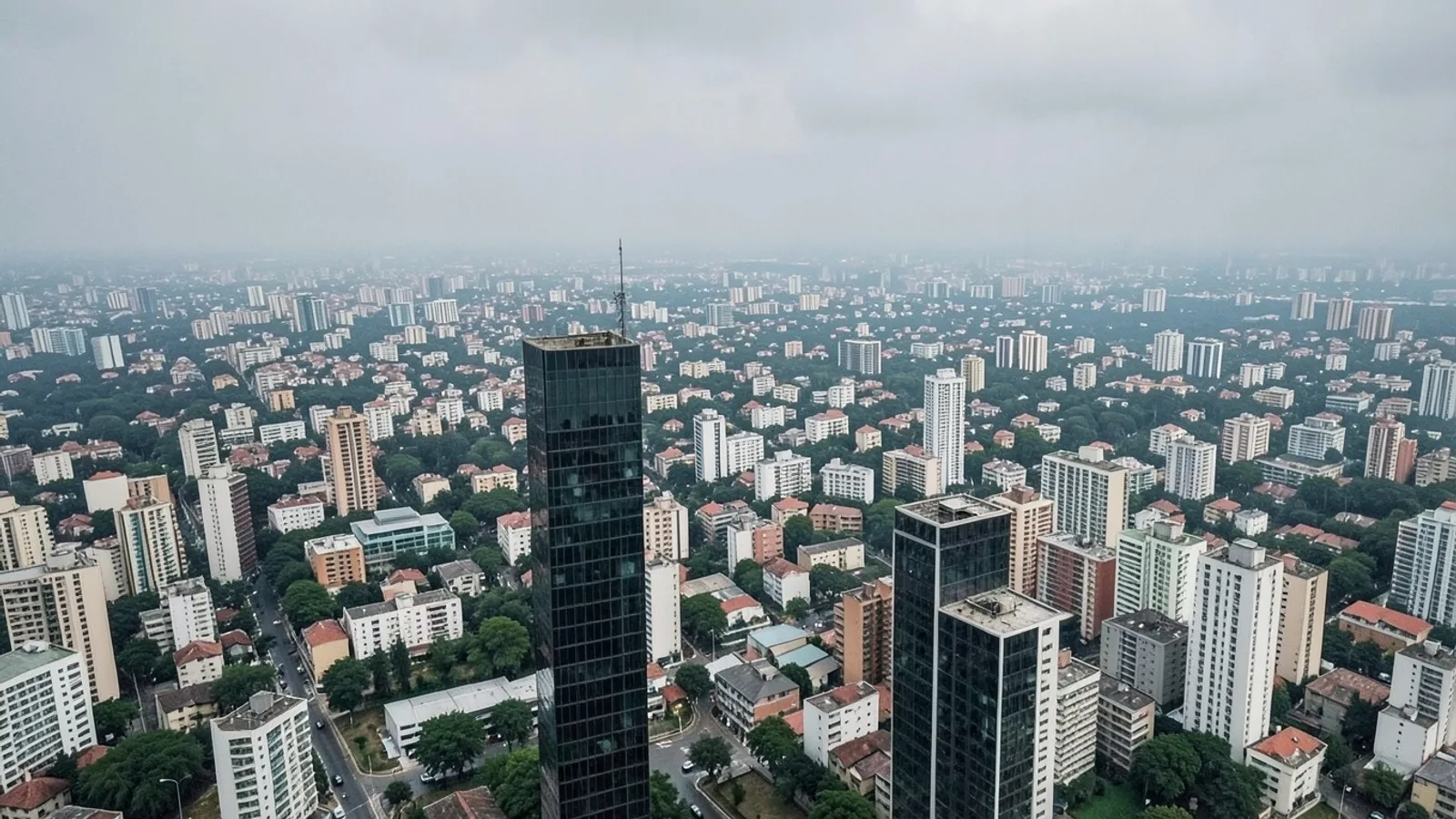
Anyone who lives or invests in São Bernardo do Campo, a city in the state of São Paulo with about 841,000 inhabitants, deals with property in many forms: a financed apartment, an inherited house, a rented commercial unit, a plot of land bought from an acquaintance. In many of these cases, the problem does not appear at the moment of signing, but months later, when a debt that nobody mentioned comes up, a deed that cannot be issued, or rent that stops being paid. A real estate lawyer is the professional who helps you see these risks beforehand and respond methodically when they have already happened.
This article explains, in practical terms, when it is worth seeking a lawyer who specializes in real estate law, what this professional usually checks, which questions to ask in the first conversation, and how the app helps you reach a professional in this field in your city. To start organizing your case, you can use the city page and describe what happened.
What a real estate lawyer does in practice
When someone searches for real estate lawyers or for a real estate law lawyer, they usually want to resolve one of two things: avoid a problem before closing a deal, or get out of a problem that has already started. The work covers, among other things:
- review of purchase and sale promises, deeds and financing contracts;
- residential and commercial lease contracts, rent collection and eviction actions;
- condominium disputes, such as overdue fees, fines and contested meetings;
- disputes over possession, neighbors and property boundaries;
- regularization of a property without a deed, adverse possession (usucapião) and adjudication;
- properties tied to inheritance and division among family members;
- delays and charges on properties bought off-plan.
The lawyer does not decide the outcome: the courts do the judging, and the registry officer reviews the title. What the professional does is point out the path, gather the evidence, draft whatever is needed and explain the risks clearly. For that reason, no serious lawyer promises to win the case.
Signs that it is time to consult a professional
Not every deal requires lengthy procedures, but some signs call for a conversation with a professional before any payment is made:
- They ask for a deposit in a hurry. Excessive urgency to transfer money, with no time to review documents, is a reason for caution.
- The seller is not the person named in the property registration. They may be an heir, a previous buyer who never registered the purchase, or an attorney-in-fact; each case requires its own checks.
- The contract is a generic template. Texts copied from the internet rarely address the deadline for the deed, the return of amounts paid, and penalties in a way that suits your case.
- The property is occupied by third parties. A tenant, a relative, or an occupant with no contract changes how the property can be taken over.
- There has been a delay or a unilateral change. A builder that fails to deliver, a new charge that no one explained, or a seller who disappears after the deposit.
Buying and selling: what to check before paying
In Brazil, ownership of real estate between living persons is transferred by registering the title at the real estate registry office. A receipt, possession, and handing over the keys are not enough on their own. Someone who buys with only a private document may later discover that the previous owner had debts and that the property was caught up in an enforcement action.
The real estate lawyer usually checks whether the person selling can actually sell. This includes the sellers' marital status, because, depending on the property regime, the spouse's signature may be required. It is also common to review clauses on the deadline for the deed, what happens if the deal is undone, and which penalties apply to each side. The same analysis protects the seller, who needs assurance of being paid and that the buyer will fulfil the agreement.
Checklist before closing
- Up-to-date property registry record: shows the owner and whether there are any seizures, mortgages, fiduciary liens or other restrictions.
- Property debts: property tax (IPTU) and other charges stay with the property, so it is worth confirming whether any debts are outstanding.
- Condominium status: ask for a statement, issued by the building manager or the management company, confirming that the dues are paid up.
- Lawsuits against the sellers: certificates of proceedings in the State Court and the Federal Court help identify enforcement actions that could affect the property.
- Regularity of the construction: confirm that what stands on the land matches what has been approved and recorded.
- Personal documents and authority: if someone signs under a power of attorney, the power of attorney needs to be checked carefully.
This set of checks does not eliminate every risk, but it greatly reduces the chance of a surprise. It is the real estate lawyer who interprets what each document means for your specific case.
Off-plan property, financing and delays
When buying a property under construction, the Consumer Protection Code and the rules on property development come into play in addition to the contract. Frequent problems include late delivery, charges applied after the promised deadline, differences between what was sold and what was delivered, and difficulty in undoing the deal without excessive losses. Before taking any action, keep the contract, the payment receipts, the advertising and the messages exchanged with the builder or the broker.
Depending on the case, the path may begin with a formal notice, a complaint to Procon (consumer protection agency) or a lawsuit. The choice depends on what was agreed, the amounts involved and what you want: to receive the property, to cancel the contract or to dispute the charge. A real estate lawyer helps compare these options without promising an outcome.
Renting: contracts, guarantees and late payment
Urban leases are governed by the Tenancy Law (Law 8,245/1991). A good contract sets the term, the rent adjustment index, who pays for repairs, how the move-in and move-out inspections work, and what happens if the tenant returns the property before the end of the term. Both the landlord and the tenant benefit from clear clauses.
As for guarantees, the law does not allow more than one type in the same contract. The forms it provides for include a security deposit, a guarantor and rental guarantee insurance. When rent is late, the first step is usually an organized collection effort and an attempt at a settlement; if there is no solution, an eviction action for non-payment may be available.
For anyone running a business in a rented property, the business location is part of their assets. A renewal action for a commercial lease has a deadline for filing, as a rule between one year and six months before the end of the contract, along with other requirements. Leaving it to the last minute can cost you the location where your customer base was built. The tenant also has a right of first refusal if the property is sold, subject to the conditions of the law.
Possession, adverse possession and property without a deed
It is common to find properties without definitive title: an inheritance with the probate not yet concluded, a purchase through an informal private contract, an informal assignment of possession. This gets in the way of financing, sale and division of assets. Depending on the documents available, the real estate lawyer can assess:
- Compulsory adjudication: when the price has been paid and the seller does not grant the deed;
- Adverse possession (usucapião): when there has been continuous, peaceful possession as an owner for the period set by law, through a notary's office or a court action, depending on the case;
- Probate and division of the estate: when the property is still in the name of someone who has died.
If someone invades, interferes with use or takes possession, time matters. Photos, documents, bills in your name, witnesses and, when necessary, a technical survey of the land help demonstrate prior possession.
Where real estate disputes are decided
As a rule, lawsuits over real estate are heard in the State Court, and appeals go to the Court of Justice of São Paulo. In specific cases, they can reach the Superior Court of Justice and the Federal Supreme Court. Lower-value claims may be heard in the Small Claims Court, under Law 9.099/1995. Claims brought by consumers can also start at Procon (consumer protection agency). People who cannot afford a private lawyer can turn to the Public Defender's Office.
São Bernardo do Campo and neighboring cities: what changes in practice
São Bernardo do Campo shares a practical border with several cities in the Greater ABC region and the metropolitan area. It is common for someone to live in one city, work in another and buy property in a third. In lawsuits over rights in rem in real estate, the venue is, as a rule, the place where the property is located. For this reason, the exact location of the property determines where certificates are requested, where the registration is made and where any lawsuit will be filed.
In Santo André, 4.3 km away, and in Diadema, 5.9 km away, the proximity means many families compare housing and rental options between the cities. Anyone closing a deal in one of them should check the property record (matrícula) and the debts of the municipality where the property is located, not those of the city where they live. In São Caetano do Sul, 8 km away, and in Mauá, 10.9 km away, the same attention goes to using the correct registry office and city hall for certificates and taxes.
Ribeirão Pires, 15.6 km away, and Rio Grande da Serra, 17.9 km away, often raise questions about land and areas with a history of more irregular occupation, where regularization and possession carry more weight. In São Paulo, 17.8 km away, the search frequently involves apartments, leases and condominiums. In Taboão da Serra, 24.3 km away, the same care applies: confirm the location of the property before any contract. In all these cases, a real estate lawyer helps identify the competent venue and registry, so you do not have to guess.
How to choose, and what to ask in the first conversation
Before you hire anyone, it's worth clearing up a few points. This applies whether you're looking for a real estate lawyer for a simple contract or for a long dispute:
- Does the professional work in the area of your problem (buying, renting, condominium, possession)?
- Which documents does this professional need in order to give an opinion?
- What is the scope: review only, negotiation, formal notice or a lawsuit?
- How and when will the fees be paid, and what is included?
- What outside expenses are there, such as certificates, registry fees and court costs?
Be wary of anyone who guarantees a win. The practice of law does not allow promises of results, and a written fee agreement protects both sides.
How contact through the app works
You tell what happened in your own words, by voice or text, for free and without having to log in. An assistant organizes your account into a case summary and takes you to lawyers in the relevant area in your city. You choose which lawyer to talk to.
The conversation is private, inside the app, and only moves forward if both sides accept; your personal data is not exposed before then. The lawyers keep a page with their areas of practice and answer consultation requests through the platform. The fees are agreed in writing before the work begins.
If you need to review a purchase and sale promise agreement, understand a rental contract, resolve a condominium problem or defend your possession in São Bernardo do Campo or the neighboring cities, describe your situation on the city page and talk privately with a real estate lawyer, with no promise of results.
São Bernardo do Campo and surroundings
Lawyers who practise in São Bernardo do Campo also take cases from nearby cities.
How it works
- Tell the case
By voice or text, no sign-in. It takes a few minutes.
- The assistant organises it
Facts, dates and documents become a clear summary.
- You choose the lawyer
Professionals who practise in São Bernardo do Campo, in alphabetical order.
Legalocal does not recommend or rank professionals: the list follows alphabetical order.
Frequently asked questions about São Bernardo do Campo
When should I look for a real estate lawyer in São Bernardo do Campo?
Ideally before paying a deposit or signing any purchase and sale promise or rental contract. It is also worth seeking help when facing a delay in the delivery of an off-plan property, a possession dispute, condominium debt or a property without a deed. No lawyer can guarantee the outcome of a case.
What is the difference between real estate lawyers and a lawyer specialized in real estate law?
In practice, the expressions describe the same kind of professional: the lawyer who handles buying and selling, leasing, condominiums, possession and regularization of properties. In the app, you describe the case and are taken to lawyers in the corresponding area in your city, and you choose which one you want to talk to.
How do I find a real estate law lawyer near São Bernardo do Campo?
You describe the situation by voice or text, for free and with no login. An assistant organizes the account into a case summary and takes you to lawyers in the real estate area in your city. Since Santo André is 4.3 km away, Diadema 5.9 km and São Caetano do Sul 8 km, anyone dealing with properties in those cities can describe the case the same way.
The property is in another city in the region. Does that change anything?
As a rule, in actions concerning property rights over real estate, the venue is the place where the property is located. If the property is in Mauá, 10.9 km away, in Ribeirão Pires, 15.6 km away, or in São Paulo, 17.8 km away, certificates, registration and any lawsuit follow the location of the property. The lawyer helps identify the correct path.
How do fees and conversation privacy work?
Fees are agreed in writing with the lawyer before the work begins. The conversation is private, inside the app, and only moves forward if both sides accept; your personal data is not exposed before that. Those who cannot afford a private lawyer can turn to the Public Defender's Office.